How to Grow Tomatoes in Containers on a Balcony or Patio
Tomatoes are the crop most people want and the one most often lost to a pot that was too small. Get the container and the watering right and a single plant can carry a whole balcony season.
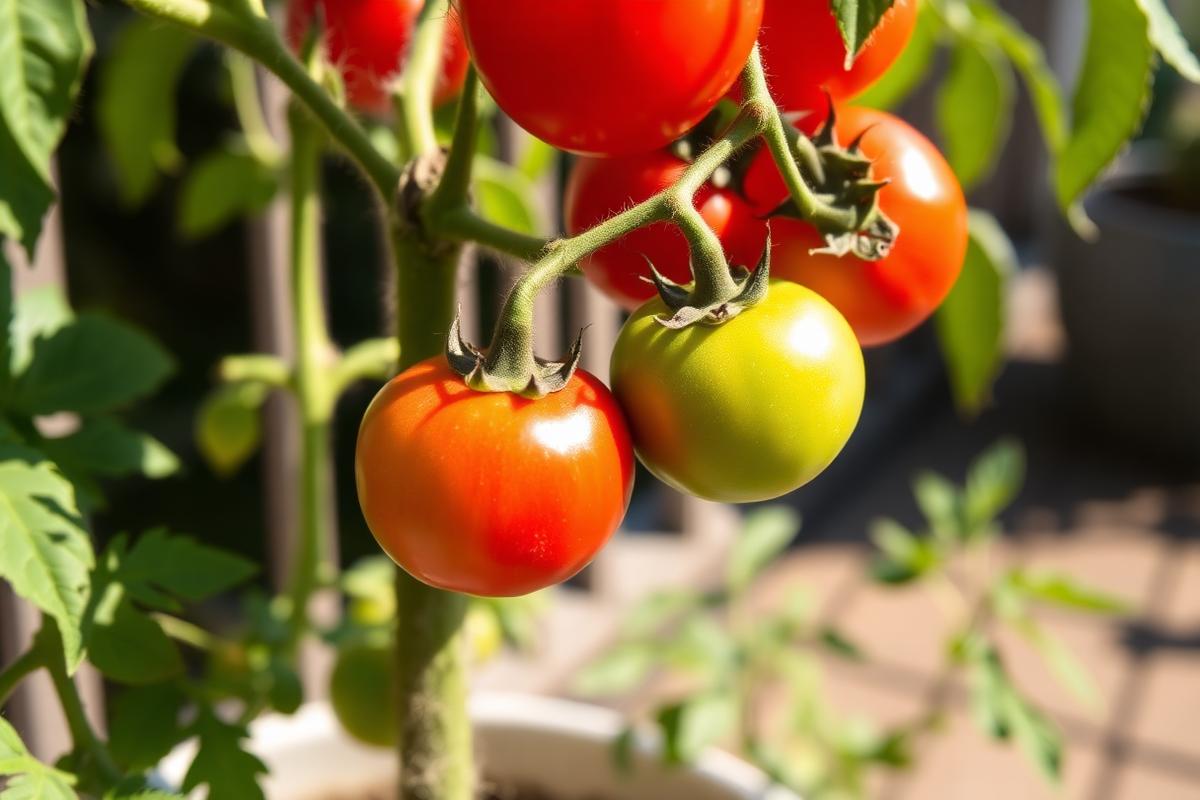
Quick answer
Grow a determinate or patio variety in a 10-gallon container with fresh potting mix, in at least six hours of direct sun. Water deeply and consistently every day in summer, feed a tomato fertilizer every two weeks, and support the plant with a cage from the day you plant it.
Choose the right variety
| Type | Habit | Container fit |
|---|---|---|
| Determinate / bush | Grows to a set size, fruits in a flush | Best for pots |
| Patio / dwarf | 12-24 in tall | Ideal for balconies and railings |
| Tumbling cherry | Trails downward | Perfect for hanging baskets |
| Indeterminate | Vines all season, 6 ft+ | Only with 15+ gal and strong support |
Container, soil and planting
- Minimum 7 gallons; 10 gallons is much safer for consistent moisture
- Fill with fresh potting mix plus compost and slow-release tomato feed
- Bury the seedling deep — up to the top two sets of leaves — to grow roots along the stem
- Install the cage or stake at planting time, before roots are established
- Mulch the surface to steady moisture levels
Watering and feeding schedule
Inconsistent watering is the direct cause of blossom end rot and split fruit. Aim for evenly moist soil rather than a wet/dry cycle.
- Water daily in summer, twice on very hot days for 7-gallon pots
- Water the soil, not the leaves
- Feed a high-potassium tomato fertilizer every two weeks once flowers appear
- Never let the pot dry out completely, then flood it
Pruning and pollination
- On indeterminate plants, pinch side shoots in the leaf joints to keep one or two main stems
- Leave determinate plants mostly unpruned — pruning cuts your harvest
- Remove yellowing leaves touching the soil to reduce disease
- Tap or gently shake flowering stems to help pollination on sheltered balconies
Fixing common tomato problems
| Problem | Cause | Fix |
|---|---|---|
| Black sunken bottom (blossom end rot) | Uneven watering blocking calcium uptake | Water consistently, mulch, use a bigger pot |
| Flowers drop, no fruit | Heat above 90°F or no pollination | Shade at midday, shake flowers |
| Split fruit | Heavy watering after a dry spell | Even moisture, mulch |
| Leggy pale plant | Too little light | Move to the sunniest spot available |
| Yellow lower leaves | Nitrogen shortage or overwatering | Feed; check drainage |
Helpful tips
- One well-fed plant in a 10-gallon pot beats three crowded plants in 5-gallon pots.
- A self-watering container is the single best upgrade for balcony tomatoes.
- Harvest when fruit is slightly soft with full colour; it will finish ripening indoors if a storm is coming.
Common mistakes to avoid
- Using a 3-5 gallon pot for a full-size variety.
- Letting the pot dry out between waterings.
- Adding the cage in July when the plant is already sprawling.
- Feeding high-nitrogen fertilizer, which gives lush leaves and few tomatoes.
Gear that genuinely helps
10-gallon fabric grow bag
Enough root volume for a full-size plant at a fraction of the cost of a ceramic pot.
Tomato cage or spiral stake
Supports heavy trusses without damaging stems.
High-potassium tomato feed
Drives flowering and fruit rather than leaf growth.
Frequently asked questions
What size pot do tomatoes need?
Ten gallons per plant is the reliable minimum for standard varieties. Dwarf and patio types can manage in five gallons.
How many tomato plants per container?
One. Two plants in a shared pot compete for water and nutrients and both yield less.
Why are my container tomatoes not producing fruit?
Usually insufficient light, temperatures above 90°F during flowering, poor pollination in a sheltered spot, or too much nitrogen fertilizer.
In short
Big pot, compact variety, steady water, regular feeding, early support. That is the whole recipe for container tomatoes.
Get Simple Gardening Tips
Practical plant tips, small-space ideas, and seasonal gardening advice delivered to your inbox.
No spam. Unsubscribe any time.
Keep reading
Small-Space Vegetables
Best Vegetables to Grow in Containers (With Pot Sizes)
The best vegetables for container gardening on balconies and patios, with pot size, sun needs and days to harvest for each crop.
8 min read
Container Gardening
How Often to Water Container Plants (Simple Rules That Work)
How often to water potted plants in different weather, how to tell overwatering from underwatering, and easy ways to keep containers evenly moist.
7 min read
Garden Problem Solver
Why Are My Plant Leaves Turning Yellow? A Container Plant Checklist
Diagnose yellow leaves on potted plants: overwatering, underwatering, nutrient shortage, light problems and pests — with a step-by-step checklist and fixes.
7 min read
Container Gardening
Container Gardening for Beginners: Pots, Soil, Water, Food
The four fundamentals of container gardening — choosing pots, using the right potting mix, watering correctly and feeding — explained for total beginners.
9 min read