Wind-Resistant Plants for Windy Balconies (and How to Block the Wind)
High-floor and corner balconies get constant wind that snaps stems, shreds leaves and dries pots out by lunchtime. The fix is part plant choice, part layout.
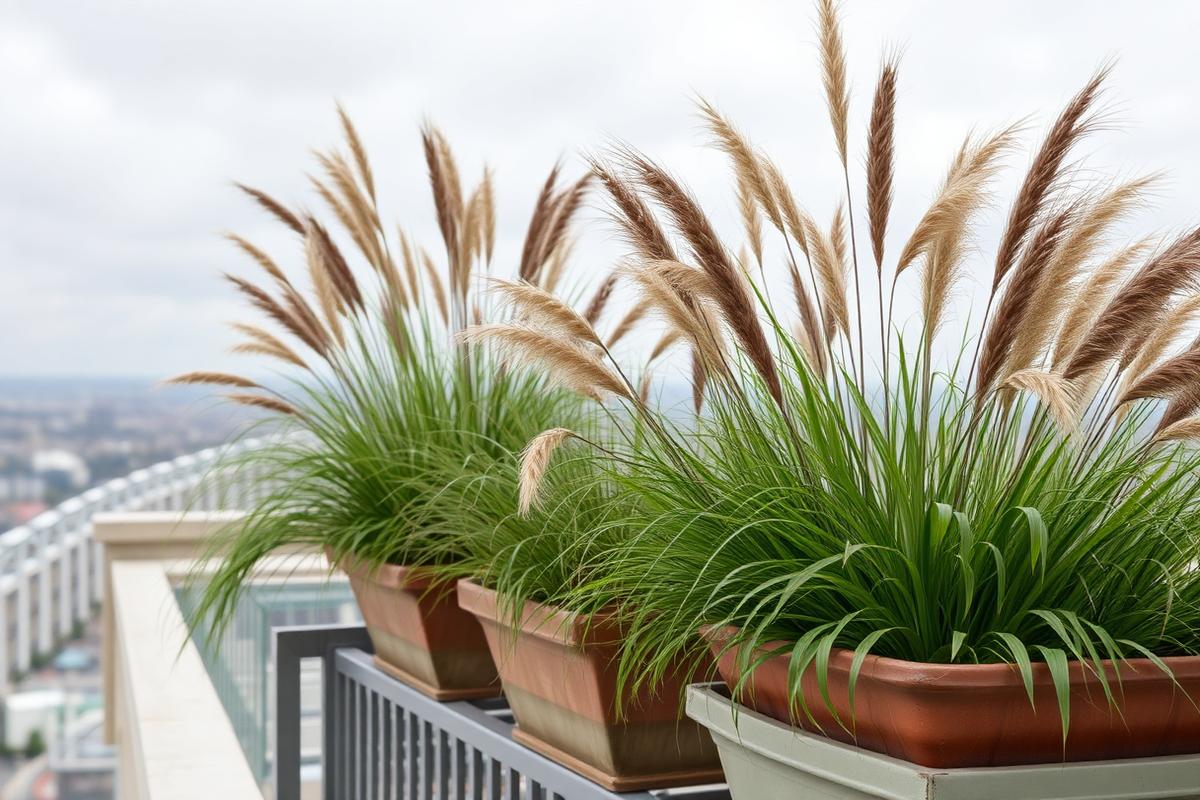
Quick answer
Grow low, small-leaved, woody plants: thyme, rosemary, sage, lavender, sedum, dwarf grasses, dianthus, and compact marigolds. Then reduce wind with a permeable screen, use heavy or wide-based pots, mulch the soil surface, and water more often than you would in a sheltered spot.
Why wind is harder on plants than heat
Moving air strips moisture from leaves faster than roots can replace it, so plants wilt even in damp soil. It also rocks root balls loose and physically tears large, soft leaves.
The most wind-tolerant container plants
| Plant | Why it copes | Light |
|---|---|---|
| Thyme | Low mat, tiny tough leaves | Full sun |
| Rosemary | Woody stems, needle leaves | Full sun |
| Lavender | Flexible stems, drought-hardy | Full sun |
| Sedum | Stores water in its leaves | Full to part sun |
| Dwarf fescue / carex | Bends with gusts | Sun to part shade |
| Dianthus | Compact and sturdy | Full sun |
| Nasturtium | Low, quick to regrow | Sun to part sun |
Block the wind without blocking the view
- Use permeable screens — reed fencing, lattice or mesh — which slow wind instead of creating turbulence like a solid panel does
- Place a taller planter or trellis on the windward side as a living windbreak
- Keep fragile plants tucked against the building wall, which is the calmest zone
- Secure railing planters with brackets and hooks, not just gravity
Stop pots from blowing over
- Choose wide, heavy-bottomed pots over tall narrow ones
- Add a layer of gravel or a brick at the base of light plastic pots and grow bags
- Cluster pots so they shelter each other
- Avoid hanging baskets on exposed corners — they swing and dry out fastest
Helpful tips
- Mulch every pot. On a windy balcony it is the single biggest water saver.
- Water early morning so plants start the day fully hydrated.
- Prune tall plants shorter than you would elsewhere — compact growth resists wind.
Common mistakes to avoid
- Installing a solid windbreak, which creates damaging swirls on the leeward side.
- Growing broad-leaved crops like chard or large hostas in full exposure.
- Assuming wilting means the plant needs more water when it is just wind stress.
Frequently asked questions
How do I know if my balcony is too windy for plants?
If a lightweight plastic chair slides or a hanging basket swings hard on a normal day, treat it as a high-wind site and start with succulents, herbs, and grasses.
Can tomatoes grow on a windy balcony?
Yes, if you choose a compact determinate variety, use a 10-gallon pot placed against the wall, and cage it rather than relying on a single stake.
In short
Slow the wind, weight your pots, and grow low tough plants. Exposed balconies can be productive, they just need a different plant list.
Get Simple Gardening Tips
Practical plant tips, small-space ideas, and seasonal gardening advice delivered to your inbox.
No spam. Unsubscribe any time.
Keep reading
Balcony Gardening
18 Best Balcony Plants for Sun, Shade and Windy Spots
The best plants for balcony gardens, sorted by how much sun you get and how exposed your space is — with pot sizes and care notes for each.
8 min read
Balcony Gardening
Balcony Gardening for Beginners: A Simple Start-to-Finish Guide
A beginner-friendly guide to starting a balcony garden: measuring sunlight, choosing pots and plants, watering, and avoiding the mistakes that kill first-year plants.
9 min read
Container Gardening
How Often to Water Container Plants (Simple Rules That Work)
How often to water potted plants in different weather, how to tell overwatering from underwatering, and easy ways to keep containers evenly moist.
7 min read